

I’ve been doing this long enough to know that when a story like this hits the news, lots of people ask themselves in quieter moments, what if that were me?
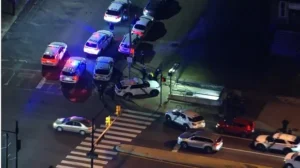
In this recent news story out of Miami, a Ferrari gets stolen in Brickell. Police try to stop it. The driver runs, crashes into a police cruiser, snaps a utility pole in half, sparks everywhere.
Now someone’s in jail, the car is destroyed, public property is damaged, and, god forbid, someone is injured.
You can almost hear the next question forming in the car owner’s head: Am I about to get sued for this?
It’s a fair question. And the answer isn’t as straightforward as many people think.
I have had clients coming into my office shaking over this exact scenario: their car gets stolen, they’ve done nothing wrong, and yet suddenly they’re getting calls from insurance companies, lawyers, investigators, prosecutors, etc. These situations are not fun for any innocent party.
So, let’s discuss what really occurs under Florida law when a person steals your car and causes an accident:
For starters, the law is typically on your side in Florida in cased of pure theft. Liability generally follows control.
So if you didn’t give permission and didn’t have the ability to control the driver and your car was taken without your consent, as was the case with the Ferrari in this news story, you usually aren’t legally responsible for what that person does.
A thief is considered an independent criminal actor.
Their decisions are their own.
Just because you’re not legally at fault, however, doesn’t mean you won’t be pulled into the situation. Insurance comapanies investigate everything. And the first thing they try to determine is whether the car was really stolen in the legal sense, or whether there was some form of permission, carelessness, or entrustment involved.
This is where negligence theories may play a role including negligent entrustment which is most common in these situations.
That’s when someone hands over a car to a driver they know—or should know—is unlicensed, intoxicated, reckless, or otherwise not competent to drive.
It’s not “theft”, but the legal theory is that the owner’s decision to give access to the vehicle created the risk that led to the crash.
That distinction matters more than almost anything else in these cases and will determine whether or not you, or another party, will be deemed liable beside the thief.
In the Brickell Ferrari incident reported by CBS News Miami, the owner said the car was stolen after a car wrap company hired someone to transport it to a warehouse.
That detail could significantly change the analysis. Once a vehicle is handed off to a third party-especially a business-legal questions multiply.
Who hired the transporter?
Was the transporter properly vetted?
Was this an employee or an independent contractor?
By whom was he in custody and control at the time?
Was the theft foreseeable?
When a vehicle is in the care of a business, be that a wrap shop, valet, mechanic, or transport company, for example, the problem ceases to simply be about theft. It turns into an issue of liability and risk assumption.
Frequently, liability will shift away from an owner and onto the business, which was in possession when something went wrong.
Depending on the exact circumstances surrounding the business’s possession and handling of the vehicle, they can be held parially liabile. A good lawyer would be able to investigate this.
You, however, would be safe on a personal level if these situations.
Now what if there was no third party intermediary and the vehicle was stolen directly from you? Let’s talk about that possible liabilty.
Similar to a pure theft scenario, insurance companies and lawyers will be asking if this was truly a theft, or was there some form of permission, access, or preventable mistake that created a foreseeable risk?
Leaving the keys in the ignition, leaving the car running unattended, failing to secure a vehicle known to be at high risk for theft, or allowing someone access to the vehicle who should not have had it can all become focal points.
In those situations, insurers may argue that this was not a true, unforeseeable theft but rather a loss enabled by the owner’s carelessness. If that argument gains traction, the carrier may reevaluate coverage positions and, in some cases, defend or even contribute toward settlement under a negligence theory—not because the owner committed a crime, but because negligence can trigger coverage where pure theft would not. From the injured party’s perspective, this is often the only path to recovery when the thief has no insurance and no assets, which is why these “gray area” theft cases are so heavily scrutinized by adjusters and lawyers on all sides.
Then, of course, there’s the issue of property damage to public resources. Utility poles, traffic signals, and police cars are costly objects. Municipalities and other government agencies tend to pursue claims for reimbursement vigorously. Even where the owner isn’t found ultimately liable, they can be stuck in the process until responsibility is sorted out.
I have seen innocent vehicle owners spend months dealing with claims, letters, and disputes from the insurance to try to prove what they already know: they did not cause the crash and did not let it happen.
Insurance companies sometimes do end up paying something in “stolen car” crashes, not because they suddenly decided to cover a thief, but because there is a viable negligence theory against an insured party. If there’s evidence the owner negligently entrusted the vehicle, or the business entrusted with the vehicle was negligent in hiring, supervision, or security, insurers may evaluate coverage and settlement exposure differently. Even when the car was stolen, if the facts support an argument that the loss was enabled by negligence rather than pure criminal randomness, that can create a pathway to coverage—whether through the owner’s policy, the business’s commercial general liability policy, garage-keepers coverage, commercial auto coverage, or other lines depending on the setup. Insurers will fight it, but they will also calculate risk, and they will pay when the alternative is a bad verdict.
The most critical thing you can do if your stolen car is involved in a crash is to act quickly and deliberately. Report the theft promptly. Delays create suspicion. Notify your insurance carrier promptly. Preserve all contracts, texts, emails, and documents-especially if there was a third party with custody over the vehicle.
And, before giving recorded statements, it’s smart to speak with a lawyer who understands how these cases actually unfold.
The biggest mistake I see people make is assuming, “I didn’t do anything wrong, so this will just go away.” Sometimes it does. Sometimes it doesn’t. And when it doesn’t, the early decisions matter.
If you are injured in an accident, call Jaime “Mr. 786 Abogado” Suarez today to Get You Paid!